In this article
Most credit-building products ask you to put down a deposit or take on a loan you don’t really need. The Grow Credit Mastercard takes a different angle: it turns the subscriptions you already pay for into a way to establish payment history with the credit bureaus. If you stream Netflix, Spotify, or Disney+, the idea is that those recurring charges can do double duty as credit-building activity.
What the Grow Credit Mastercard Actually Is
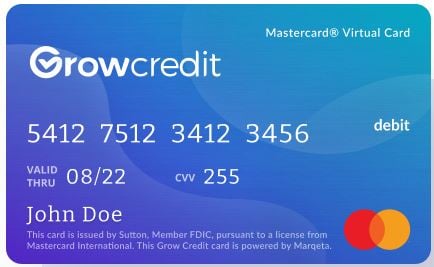
Grow Credit is a fintech product issued through a partner bank, and it works through a mobile app paired with a virtual Mastercard. It is not a typical credit card you swipe everywhere. Instead, you connect your subscription services, set the Grow card as the payment method for those subscriptions, and Grow pays the merchant on your behalf. You then repay Grow, and that repayment activity gets reported to the credit bureaus.
A key selling point is that there is no hard credit check to apply, so opening an account does not ding your score. That makes it accessible to people who are just starting out or who have struggled to qualify for traditional cards.
Plans and Monthly Costs
Grow Credit has historically offered several membership tiers. The entry-level Build plan is free and comes with a modest monthly spending limit (around the $17 range), which is enough to cover one or two streaming subscriptions. For people who don’t meet the criteria for the free plan, there is a low-cost starter option priced at roughly $1.99 per month.
Paid tiers such as Grow and Accelerate step up to higher monthly limits in exchange for monthly fees in the range of about $5 to $10. The higher limits let you route more subscriptions through the card. Importantly, Grow does not charge interest, because you’re not carrying a revolving balance in the traditional sense. Always confirm current pricing and limits in the app before committing, since plan details can change.
How It Helps Build Credit
The mechanism is straightforward. Grow reports your payment activity to all three major credit bureaus (Equifax, Experian, and TransUnion). Because payment history is the single largest factor in most credit-scoring models, consistent on-time repayment of your subscription charges can gradually build a positive track record. New activity typically takes a couple of months to appear on your reports, so patience matters.
Benefits Worth Noting
- No hard inquiry when you apply, which protects your existing score.
- No interest charges, since the card is built around predictable subscription payments.
- Reporting to all three bureaus rather than just one.
- A free tier exists, so you can build credit at essentially no cost.
- Access to credit-score tracking and financial education within the app.
Setting Up and Using the App
Getting started revolves around the mobile app. After you create an account and choose a plan, you connect the subscriptions you want to pay through Grow and set the virtual card as the payment method for each one. From then on, the flow is mostly automatic: the subscription bills the Grow card, Grow covers the charge, and you repay Grow on schedule. The app is also where you monitor your spending limit, manage which subscriptions are connected, track your repayments, and view your credit score and educational content. Because everything is digital and tied to recurring payments, there’s relatively little day-to-day effort once it’s configured. The main responsibility on your end is making sure your linked funding source has enough money so repayments clear on time, since an on-time history is the whole point. New positive activity generally takes about 60 to 90 days to surface on your credit reports, so it’s worth checking back after a couple of billing cycles rather than expecting an instant change.
The Trade-Offs and Limitations
This is a niche tool, not an everyday card. The low spending limits mean it really only works for subscriptions, not general purchases. If you don’t have several recurring streaming or app subscriptions, the value drops off quickly. The paid tiers also introduce monthly fees that can outweigh the benefit for some users.
- Spending limits are small and capped at subscription-level amounts.
- Paid plans add monthly costs that may not be worth it for light users.
- It won’t replace a real credit card for travel, emergencies, or large purchases.
- Availability can fluctuate, and at times the company has paused new applications, so access is not guaranteed.
Who Should Consider It and Who Should Skip It
The Grow Credit Mastercard makes the most sense for credit newcomers: young adults, recent immigrants, or anyone with a thin or damaged file who already pays for multiple subscriptions. If you’re paying for Netflix, Hulu, Spotify, and a couple of apps anyway, routing them through Grow is a low-effort way to generate positive history.
You should probably skip it if you already have an established credit profile, if you’d rather build credit through a secured card with a higher limit, or if you have very few subscriptions to report. In those cases, a traditional secured card or a credit-builder loan may give you more flexibility for the money.
Tips for Getting the Most Out of It
Start on the free plan if you qualify, and only move up to a paid tier if you genuinely need the higher limit. Set every connected subscription to autopay and keep enough money in your linked account so repayments never bounce. Don’t expect overnight results; treat it as a months-long habit rather than a quick fix. And remember to keep an eye on your score through the app so you can see whether the strategy is actually moving the needle for you.
The Bottom Line
The Grow Credit Mastercard is a clever, low-risk way to convert subscriptions you’re already paying for into credit-building activity, especially valuable for people who can’t easily qualify for conventional cards. The free tier and lack of a hard pull make it nearly painless to try. That said, it is a narrow tool with small limits, and the paid plans only make sense for heavier subscription users. Approach it as one piece of a broader credit strategy rather than a complete solution, and it can quietly earn its place.
This article is for general informational purposes only and does not constitute financial advice. Rates, fees, and terms are subject to change — verify the latest details with the card issuer before applying.