In this article
The Apple Card set out to reinvent what a credit card feels like, leaning heavily on a clean iPhone experience, daily rewards, and a fee-free structure. For people deeply embedded in the Apple ecosystem, it can be a genuinely convenient everyday card. Here we examine its features, rewards, and the practical trade-offs you should weigh before applying.
What the Apple Card Is
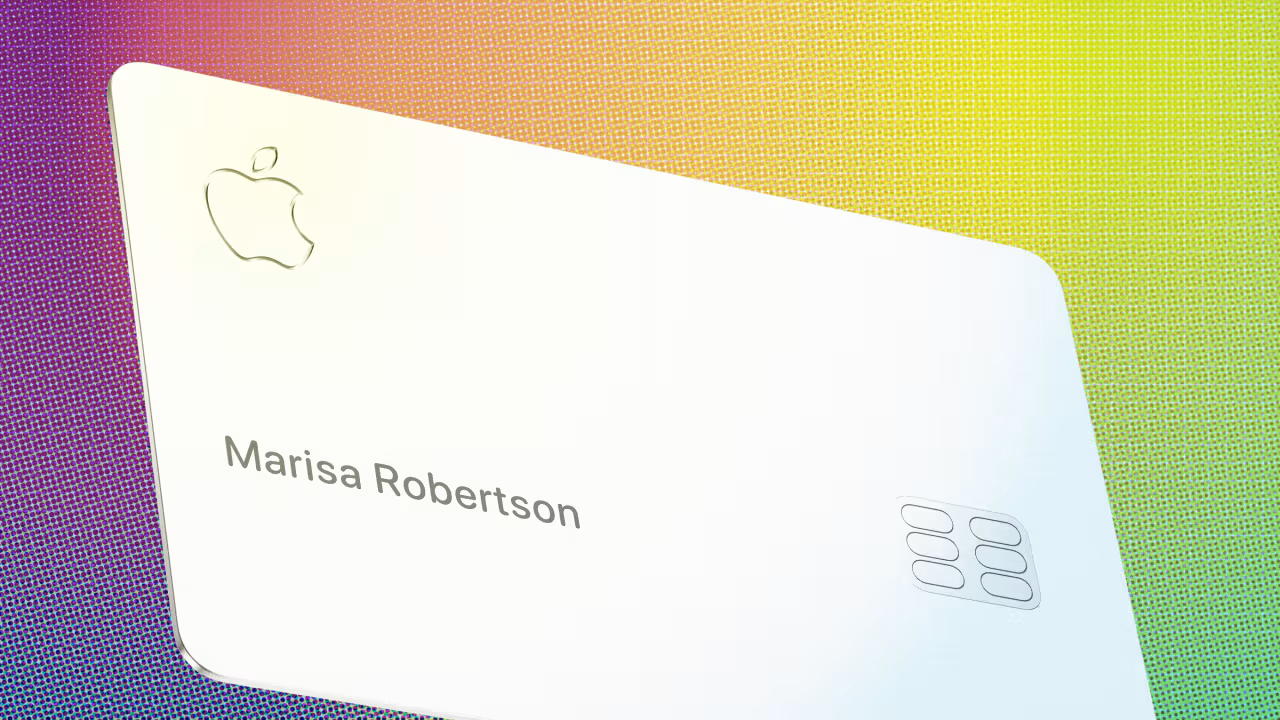
The Apple Card is a credit card created by Apple and built primarily around the Wallet app on iPhone. It was launched in partnership with Goldman Sachs, though Apple has been moving to a new banking partner, so the issuer behind the scenes may change over time. The experience centers on Apple Pay: you manage the card, view spending, and track rewards entirely within your iPhone, with a titanium physical card available as a backup for places that don’t accept Apple Pay.
Its standout philosophy is transparency and simplicity — no confusing fee schedule, with clear spending summaries and color-coded purchase categories baked right into the interface.
Fees and Interest
One of the Apple Card’s biggest selling points is its fee structure. It charges no annual fee, no foreign transaction fees, no over-limit fees, and no late fees. Note that “no late fee” doesn’t mean late payments are free of consequences — interest still accrues and missed payments can hurt your credit.
Like any card, it does charge interest if you carry a balance, with a variable APR that spans a wide range depending on your creditworthiness. Because the card has no rewards penalty for carrying a balance but also no intro 0% APR offer, the smart move is to pay in full each month. Apple also provides tools that show how much interest you’ll pay based on your payment amount, nudging users toward paying more.
Daily Cash Rewards
Rewards come in the form of Daily Cash, which is exactly what it sounds like — cash back delivered every day rather than once a month. The earning tiers are:
- 3% back on purchases made directly with Apple and at select partner merchants when you pay with Apple Pay.
- 2% back on all other purchases made with Apple Pay.
- 1% back when you use the physical titanium card where Apple Pay isn’t accepted.
The structure clearly rewards Apple Pay usage, so the more merchants you can tap-to-pay with, the more you earn. Daily Cash can be spent immediately, sent to friends, applied to your balance, or moved into a linked savings account that has at times offered a competitive yield.
Standout Features and Benefits
Beyond rewards, the Apple Card emphasizes a polished digital experience: instant approval and use within Wallet, real-time transaction notifications, weekly and monthly spending breakdowns, and privacy-focused security with a unique device number instead of a printed card number. The optional high-yield savings account lets you grow your Daily Cash automatically. The card also supports financing for Apple products at 0% over fixed terms, which can be appealing if you regularly upgrade devices.
Pros and Cons
- Pro: No annual, foreign transaction, over-limit, or late fees.
- Pro: Daily Cash pays out every day with no redemption minimums.
- Pro: Excellent, transparent iPhone experience and spending insights.
- Pro: Optional high-yield savings account for Daily Cash.
- Con: Top rewards require Apple Pay; the physical card earns only 1%.
- Con: Deeply tied to Apple devices, offering little to Android users.
- Con: No traditional sign-up bonus or premium travel perks.
- Con: Variable APR can be high, so carrying a balance is costly.
Who It’s For and Who Should Pass
The Apple Card is a natural fit for iPhone owners who already use Apple Pay regularly and want a simple, attractive cash-back card with no fees. If you buy Apple products often or value a clean digital interface and daily rewards, it delivers a satisfying experience. It’s also a reasonable option for those who appreciate the no-late-fee, privacy-forward approach.
It makes less sense for Android users, who can’t access the core experience, and for rewards maximizers chasing big sign-up bonuses or transferable travel points. Anyone who frequently shops at merchants that don’t accept Apple Pay will be stuck at the 1% physical-card rate, undercutting the value proposition.
Tips to Maximize Value
Use Apple Pay wherever possible to capture the 2% and 3% tiers instead of the 1% physical-card rate. Funnel all your Apple purchases through the card to earn the top 3%. Consider routing your Daily Cash into the linked savings account so your rewards earn additional yield over time. Above all, pay your statement in full each month to keep the variable APR irrelevant, and lean on the in-app payment tools to stay ahead of interest.
Final Verdict
The Apple Card is a strong everyday cash-back card for the right user — namely, an iPhone-centric shopper who embraces Apple Pay and a fee-free structure. Its daily rewards, transparent design, and lack of typical fees are genuine strengths. The catch is that its best rewards and its entire experience hinge on living inside the Apple ecosystem, and it lacks the bonuses and travel flexibility of competing cards. For loyal Apple users, though, it’s an easy and convenient card to recommend.
This article is for general informational purposes only and does not constitute financial advice. Rates, fees, and terms are subject to change — verify the latest details with the card issuer before applying.